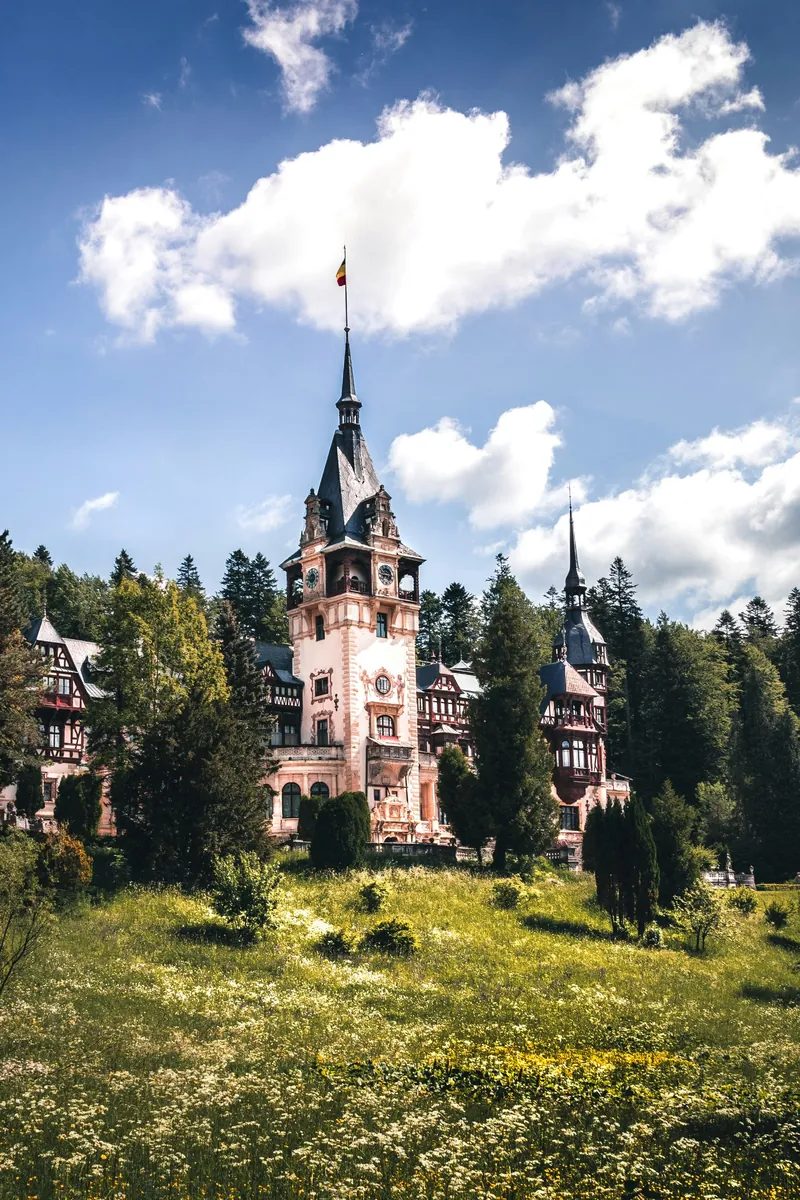
Walk through King Carol I's fairy-tale castle in the Carpathian forest
The Neo-Renaissance royal palace above Sinaia, with its carved-walnut Hall of Honour, a 4,000-piece armoury and a stained-glass ceiling that slides open to the sky.
See the Peleș Castle day trip- 1873 Construction began
- 170+ Rooms inside
- 1st Fully electric castle in Europe
- 124 km North of Bucharest
Tickets and tours for Peleș Castle
Compare the best-rated ways to visit, check live availability and book in a few taps.
- Top pick
From Bucharest: Dracula Castle, Peles and Brașov Day Trip
A full-day coach trip from Bucharest with a guided visit inside Peleș Castle, then Bran Castle and a walk through Brașov old town; castle tickets are paid on the day.
From US$36Check availability ↗ Dracula's Castle, Peles & Brasov Day Trip from Bucharest
The most-booked day trip from Bucharest, stopping at Peleș Castle, Bran Castle and Brașov with a guide; castle entry is an extra fee.
From US$22Check availability ↗From Brașov: Castles Tour - Bran, Peles, Sinaia Monastery
A guided castles day from Brașov covering Peleș, Bran and Sinaia Monastery, with transport and water; entry fees are paid separately.
From US$65Check availability ↗From Brasov : Bran Castle, Peles, Sinaia & Cantacuzino
A day tour from Brașov with hotel pickup that takes in Peleș, Sinaia, Bran and Cantacuzino Castle; castle tickets are not in the price.
From US$53Check availability ↗Peleș Castle or Bran Castle Entry Ticket
A plain entry ticket for Peleș Castle (ground and first floor) if you are making your own way to Sinaia; each booking covers one castle.
From US$44Check availability ↗
More things to do nearby
About Peleș Castle
Peleș Castle was built between 1873 and 1914 as the summer residence of King Carol I, the first King of Romania, who chose this fir-clad valley above the mountain town of Sinaia for its cool air and Carpathian seclusion. Designed in a German Neo-Renaissance style with Gothic Revival touches, its timber-framed turrets rise straight out of the forest — the picture most people have in mind when they imagine a fairy-tale castle.
Behind the storybook façade is one of the most technically advanced houses of its age. Peleș was the first castle in Europe to be lit entirely by its own electrical plant, with central heating in every room, an early central vacuum system and two elevators. The Hall of Honour, panelled in carved walnut, is crowned by a stained-glass ceiling that slides open to the sky at the touch of a switch.
Today the palace is the Peleș National Museum, its 160-plus rooms filled with armour, Murano chandeliers, German stained glass, Cordoba leather and nearly two thousand paintings. Visits are by timed entry, and English-language guided tours run through the day at no extra charge.
Practical information
- Opening hours
- Open Wednesday to Sunday; closed every Monday and Tuesday, and for the whole of November for annual maintenance. Wednesday 10:00–17:00; Thursday–Sunday 09:15–17:00. Last entry is around 16:00, and visits are by timed slot. Confirm current hours when you plan your day.
- Address
- Aleea Peleșului 2, Sinaia 106100, Prahova County, Romania.
- Getting there
- From Bucharest, take a train from Gara de Nord to Sinaia (about 1 hour 45 minutes), then a 25–35 minute uphill walk through the town and park, or a short taxi. From Brașov it is about 1 hour by train. By car, park in the lots below the castle — the final approach is pedestrian-only, a 10–15 minute walk up through the forest.
- Accessibility
- Peleș is a multi-level historic palace with staircases between floors, reached by a steep uphill walk on park paths. Step-free access is very limited. Plastic shoe covers are handed out at the entrance and must be worn over your footwear to protect the historic floors.
- Bag policy
- Large backpacks and bags may need to be left at the entrance cloakroom. There is no large-luggage storage, so leave suitcases at your accommodation.
- Photography
- Amateur photography without flash is allowed inside. Professional cameras and tripods require a separate paid permit from the museum.
Plan your visit
Practical guides written by our travel team
The Best Time to Visit Peleș Castle
Which season, which day and which hour to choose for Romania's grandest royal castle — a timing guide to Peleș above Sinaia.
How to Get to Peleș Castle from Bucharest
The train to Sinaia, the uphill walk to the castle, and the fastest way to turn Peleș into a Carpathian day-trip from the capital.
Peleș vs Pelișor: Which Castle to Visit
How the grand royal residence and its smaller Art Nouveau neighbour differ, and how to see both in one Carpathian visit.
Frequently asked
Is the visit guided, and is there a tour in English?
Peleș is shown on a set tour route. English-language guided tours form at the entrance at scheduled times through the day, at no extra charge — a real bonus that many visitors don't realise is included. If you'd rather not wait for the next English group, you can also walk the route independently.
How do I get to the castle?
Most visitors come by train to Sinaia — about 1 hour 45 minutes from Bucharest's Gara de Nord, or roughly an hour from Brașov — then walk 25–35 minutes uphill through the town and park, or take a short taxi. By car, you park in the lots below the castle and walk the last 10–15 minutes, as the final approach is closed to traffic.
How long should I allow for the visit?
The standard tour takes about 1 to 1.5 hours inside the castle. Add time for the uphill walk from Sinaia, and for the park and the neighbouring Pelișor castle if you plan to see it too. Arriving 15 minutes before your slot gives you time for the shoe covers and the entrance.
Is Peleș Castle good for children?
Yes. The armoury — around 4,000 swords, shields and full suits of armour — is a reliable hit, and the storybook turrets and forest setting do the rest. The tour involves stairs and historic floors, so a baby carrier works better than a pushchair, and everyone wears the shoe covers handed out at the door.
When is the best time to visit?
The first slot of the day is quietest; crowds build from around 11:00 in peak season. Late September and October are beautiful, with autumn colour in the forest and thinner crowds. The castle is closed every Monday and Tuesday, and for all of November for maintenance.
Can I see Pelișor on the same visit?
Yes, and many people do. Pelișor — the smaller Art Nouveau residence of King Ferdinand and Queen Marie — sits a few hundred metres away in the same park, with its famous Golden Room. It needs its own separate ticket and takes about 30–45 minutes. This page covers Peleș itself.
Is the castle wheelchair accessible?
Only partly. Peleș is a multi-level historic palace reached by a steep uphill walk, with staircases between floors and very limited step-free access. Visitors with limited mobility should plan carefully and consider arriving by taxi to the upper drop-off; the interior route involves stairs.
Is the castle open all year?
No. Peleș is open Wednesday to Sunday and closed every Monday and Tuesday. It also closes for the whole of November each year for maintenance — during that month the nearby Pelișor castle usually stays open, so a trip to Sinaia is still worthwhile.
How does booking work on this site?
This site is an independent visitor guide to Peleș Castle. When you choose a ticket or tour, you book it directly with GetYourGuide, which takes the payment, issues the ticket and handles any changes or cancellations. We may earn a commission when you book, at no extra cost to you.